*This article by INSTALL executive director David Gross was originally featured in The Flooring Contractor Magazine.
Beyond Recruitment: Building Confidence in the Flooring Workforce
Just a few years ago, the flooring industry conversation about the next generation of installers centered on recruitment and retention, specifically, how we were attracting people into the floor covering trades and how we were keeping them engaged in the profession to grow a stable workforce.
Today, recruitment and retention are still just as important, but for the International Standards & Training Alliance (INSTALL), they have become part of a much broader strategy. Now, the focus is on building a comprehensive workforce development system and a market growth system that connect all stakeholders: from apprentices, journeypersons, contractors, and manufacturers to training centers, specifiers, architects, procurement officers, and end users.
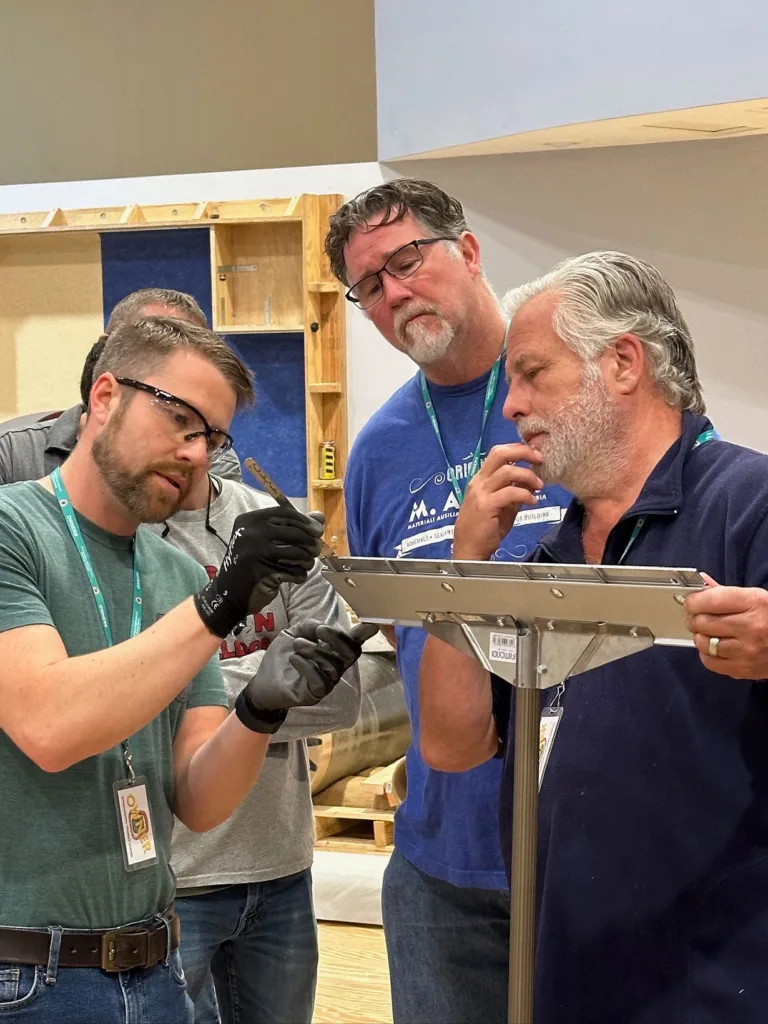
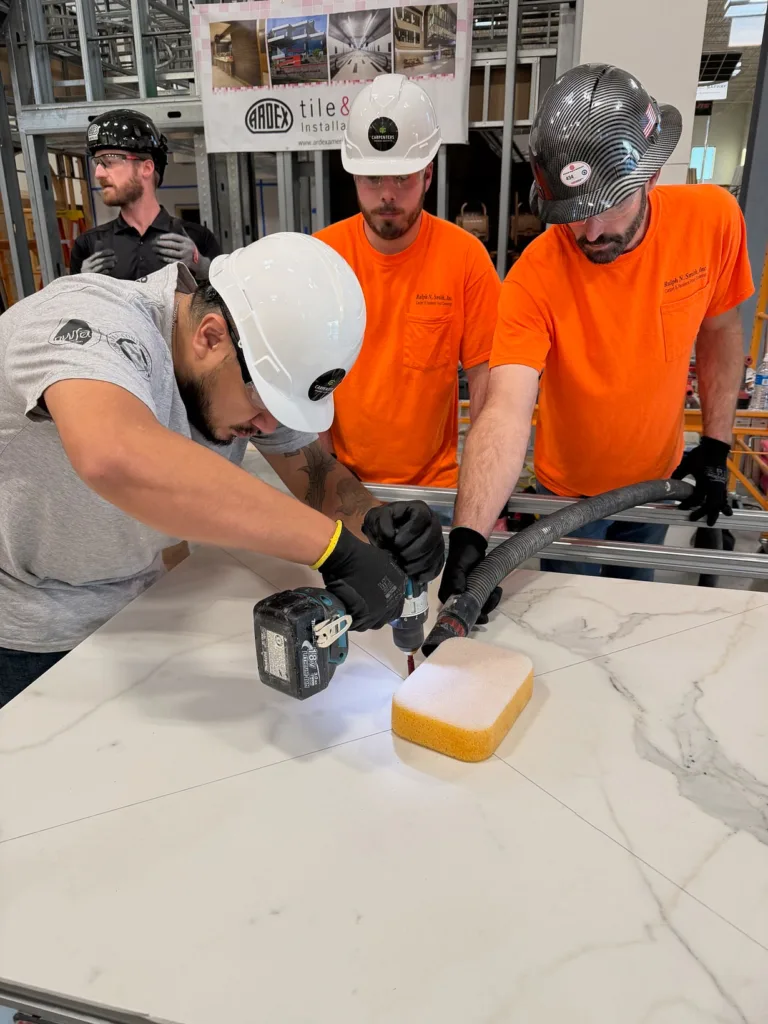
This wider industry approach reaches beyond simply training installers to creating confidence in the entire installation process. That means engaging with more contractors seeking qualified labor, increasing our number of manufacturing partners, obtaining standards recognition from the U.S. Department of Labor and other governing bodies, and educating markets on the value of specifying certified installers.
It is a sizable undertaking, but the goal is straightforward: build a workforce that is not only large enough to meet demand but also qualified to give every stakeholder confidence in the finished installation.
Remaining Committed to Recruitment and Retention
The labor shortage has been an ongoing industry challenge, and how we approach that challenge has matured. Workplace culture, advancement, mentoring, and respect for the craft are still important, but what truly drives recruitment and retention is the creation of a real career pathway.
People are more likely to enter and stay in the trade when they can see a clear career progression and opportunities for professional growth. That may include seeking specialized training such as Infection Control Risk Assessment (ICRA) or expanding certification in different types of flooring materials. These options allow the installer to grow within the profession and stay engaged—from learning the trade, to mastering the craft, to leading others, and ultimately shaping the future of the industry.
Ongoing training to maintain certification is also part of the equation. Flooring products, material technologies, and installation techniques are constantly changing. Substrate preparation, moisture mitigation, resilient flooring, LVT, rubber, healthcare flooring, athletic surfaces, hardwood systems, coatings, adhesives, self-leveling technologies, and even the concrete substrate are evolving. Keeping pace with those changes requires continuous professional development, and that opportunity to continue learning helps keep installers engaged in their craft.
Expanding Apprenticeship Recognition and Endorsements
Another important part of building confidence in the flooring workforce is earning apprenticeship recognition and standards endorsements.
Most recently, INSTALL expanded recognition in the western United States, with approvals in Washington State and reciprocity agreements in Oregon and Montana. These add to statewide recognition in California that was achieved in 2024, and our long-time presence in Nevada. Earning these approvals means apprentices in these geographic areas have a recognized credential that can travel with them if they choose to relocate to a participating region or state. That portability matters, as a career pathway becomes more valuable when the skills and credentials workers earn can follow them as opportunities change. Recognition also helps demonstrate that flooring installation is a skilled profession with established standards for entering and advancing in the trade.
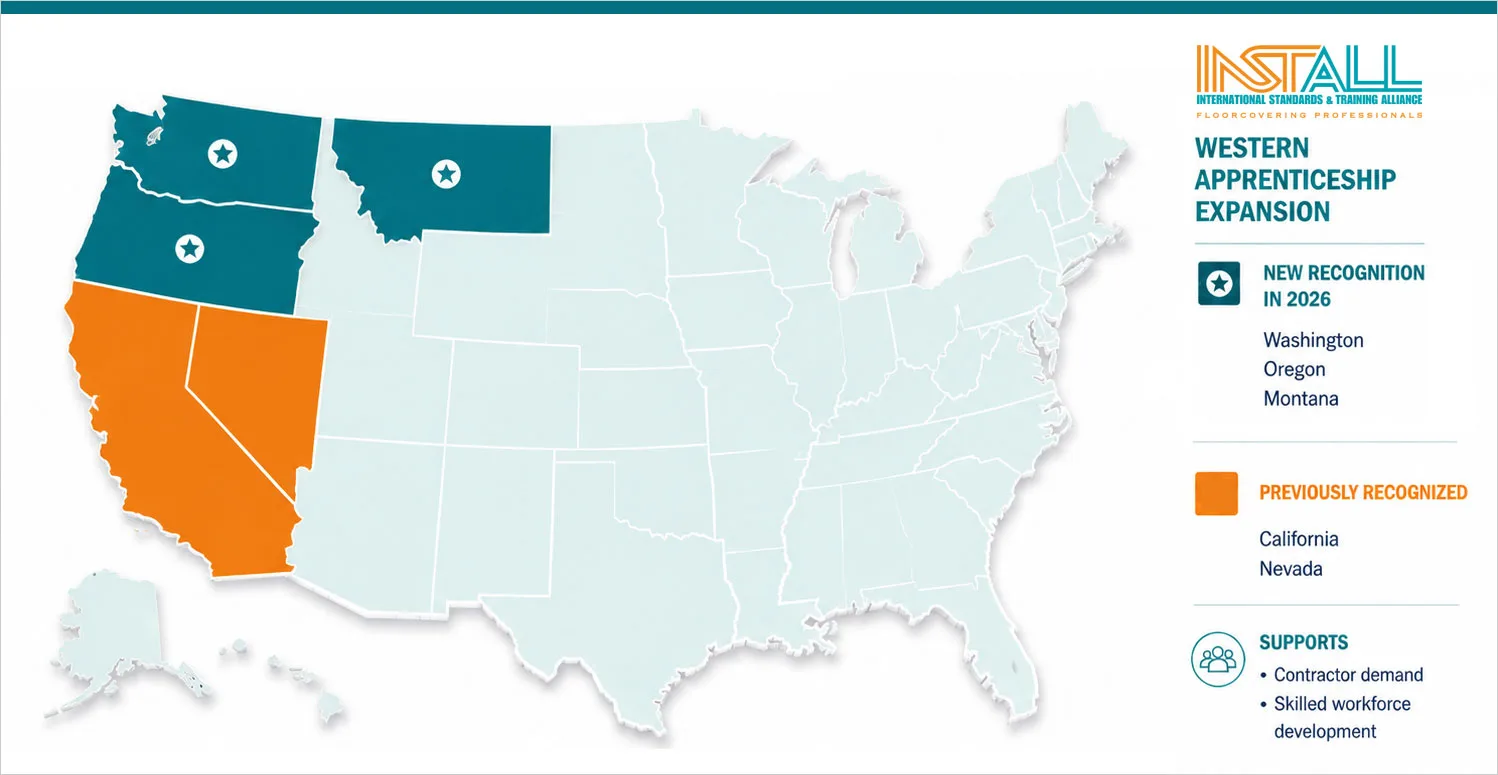
In 2026, INSTALL expanded its apprenticeship recognition in the western U.S., supporting its goal of creating a workforce development and market growth system that connects all stakeholders.
Industry partnerships extend that recognition into the marketplace. INSTALL has a Memorandum of Understanding (MOU) with nine industry-leading substrate and underlayment manufacturers that have endorsed our Substrate Prep Certification program and established certified installers as those who meet manufacturer specifications for extended product warranties. The manufacturers included in the MOU are AC Tech, Ardex Americas, CMP Specialty Products/CGM, Inc., H.B. Fuller/Tec, MAPEI Corporation, Schönox, SIKA, UFloor Systems, and USG.
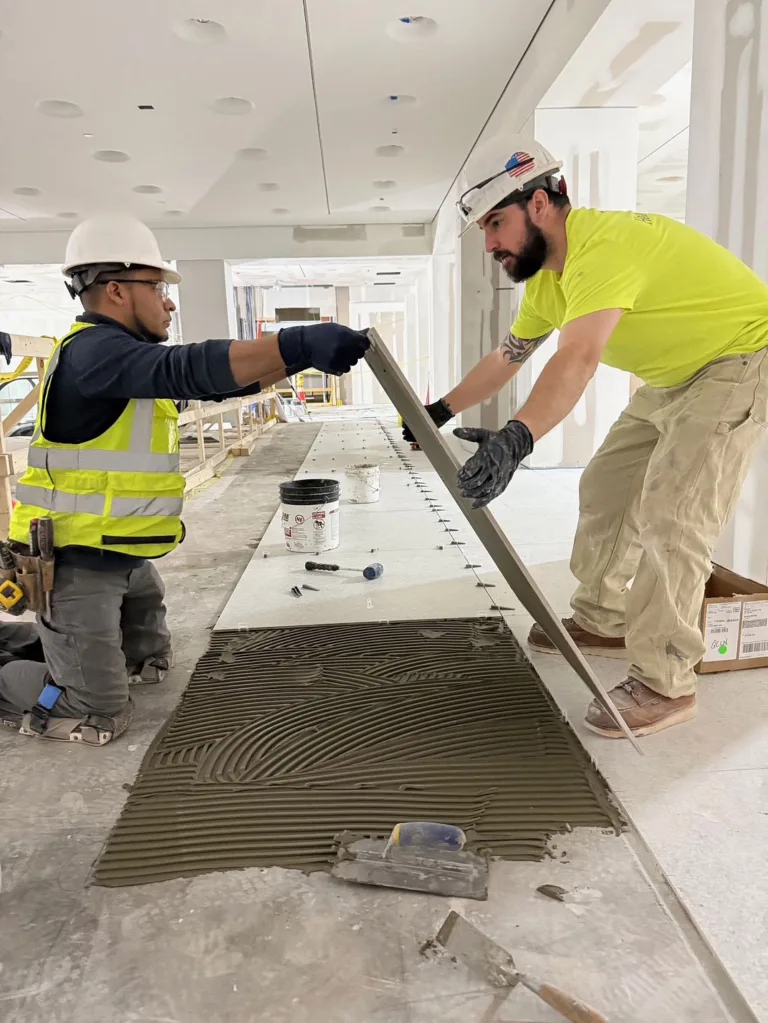
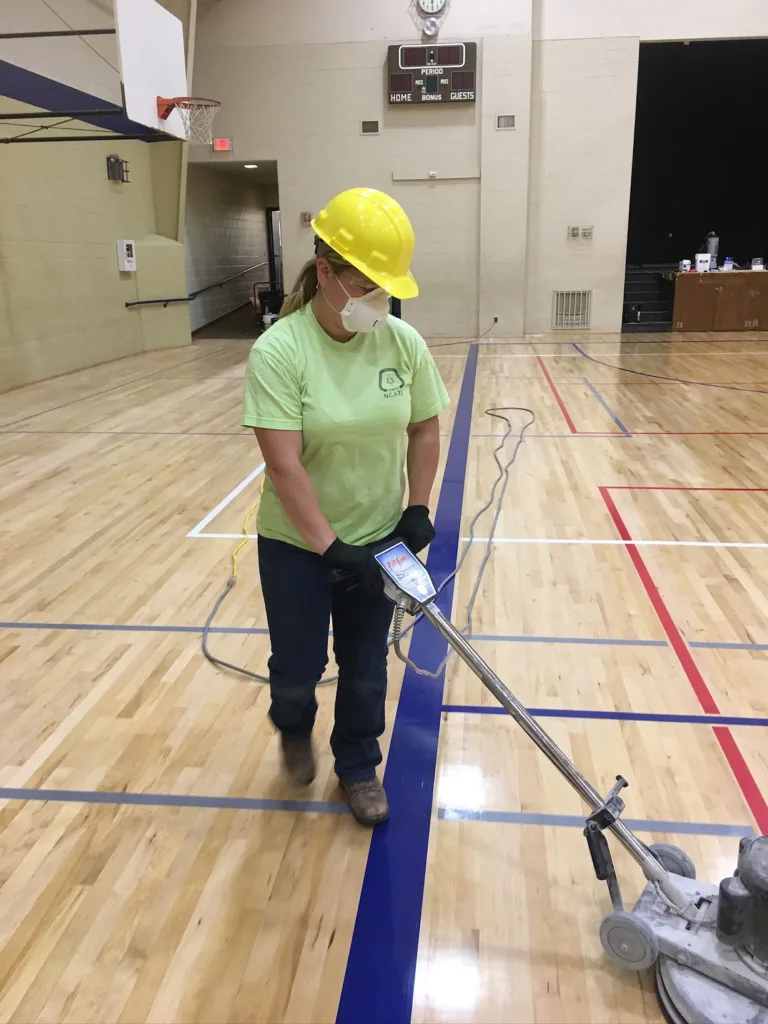
Likewise, our organization also integrated its certification standards into the U.S. Department of Veterans Affairs (VA) Master Construction Specifications, which require that commercial carpet, resilient tile, resilient sheet, or athletic carpeting for VA facility projects must be completed by an INSTALL certified installer.
These relationships demonstrate an important shift: Certification is no longer only about what happens in the training center. It is increasingly becoming a way for the marketplace to identify qualified professionals and establish expectations for installation quality.
Reducing Risk Through Certification
From construction market and project owner perspectives, apprenticeship recognition and certification offer two key benefits. First, they help grow the local workforce, improving labor availability in regions with high construction demand. Second, they help improve the quality and consistency of the labor, reducing risk on complex commercial projects.
While flooring typically represents only 1-3% of a total project budget, installation failure in an occupied facility can be 10 to 20 times the original cost to correct. At the same time, the skill set required for successful installation is becoming increasingly technical. Moisture conditions, substrate preparation, adhesives, resilient systems, carpet systems, athletic surfaces, healthcare infection-control requirements, and manufacturer-specific installation standards all require installers to understand more than simply how to lay product on a floor.
That is why certification is becoming increasingly relevant to project specifications. For owners and specifiers, a certified installer provides a measurable qualification rather than an assumption that someone has the necessary experience. For manufacturers, qualified installation can provide greater confidence that products will perform as intended. And for contractors, a credentialed workforce can become a competitive advantage when installation quality is part of the project conversation.
Building Confidence in the Flooring Industry
The need for skilled flooring professionals will only increase as products become more specialized, technology evolves, and project requirements become more demanding. That makes workforce development about more than recruiting enough people to fill positions. It means developing qualified professionals and connecting them with contractors, manufacturers, and projects that value their skills. As workforce development, contractor qualification, manufacturer confidence, and specification become increasingly connected, certification becomes a defining competitive advantage. The goal is not simply to build a larger workforce but to create a more qualified and connected one that gives everyone confidence in the installation and the professionals behind it.