
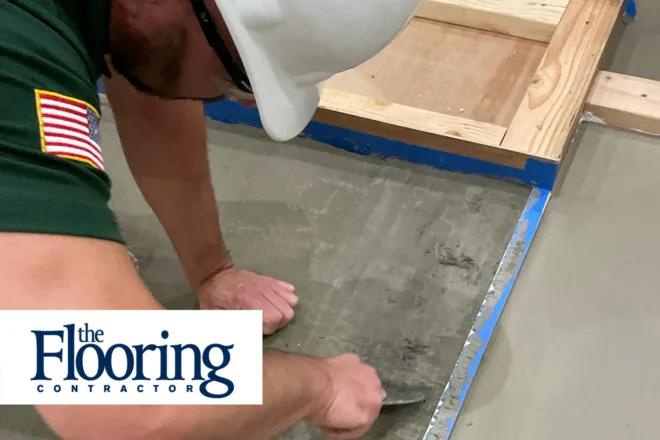
*This article by INSTALL executive director David Gross was originally featured in The Flooring Contractor Magazine.
Floored by Moisture: Avoiding Common Slip-Ups During Substrate Prep
Substrate preparation is one of the most critical aspects of commercial flooring installation, as it directly impacts the performance, longevity, and appearance of the finished floor. While most flooring contractors understand the importance of basic surface preparation—cleaning, leveling, and smoothing—many flooring failures stem from deeper issues related to moisture and pH imbalance. Specifically, unchecked moisture and high alkalinity can lead to adhesive breakdown, mold growth, warping, and flooring material failure, voiding manufacturer warranties and creating costly rework.
Commercial flooring contractors who take a proactive approach to substrate testing and mitigation can reduce their risk of callbacks, expensive repairs, and installation delays. As flooring products evolve, so do the testing methods and mitigation solutions available. Keeping up with these advancements through certification and ongoing training helps ensure installations meet manufacturer specifications and industry standards, safeguarding both contractor reputation and client investment.
Telltale Signs of Substrate Fails
When moisture levels in a substrate exceed the limits recommended by the flooring manufacturer, the negative consequences present in ways specific to each material.
For carpet installations, excess moisture can foster mold and mildew growth, creating persistent odors and potential health hazards for building occupants. High moisture or alkalinity can also weaken adhesives, leading to delamination when the carpet backing separates from the fibers.
For hardwood flooring, a moisture imbalance often results in cupping or crowning. Cupping occurs when moisture is absorbed from below, causing the edges of hardwood planks to rise. Crowning is the opposite. Excessive moisture is introduced to the surface of the wood, and the center swells higher than the edges. In extreme cases, buckling can occur when entire sections of the hardwood floor lift away from the subfloor and require complete replacement to correct.
Vinyl and resilient flooring systems are also highly sensitive to substrate moisture. Adhesives used for luxury vinyl tile (LVT), vinyl composition tile (VCT), and sheet vinyl can re-emulsify when exposed to high moisture, causing tiles to shift, curl, or lift completely. Subfloor imperfections may also become more pronounced due to telegraphing when moisture causes the vinyl to conform to underlying inconsistencies. Other common issues are bubbling and blistering — two signs of trapped moisture that compromise both aesthetics and durability.
Resinous flooring materials, such as epoxy or polyurethane coatings, require a stable substrate for proper bonding and curing. Excess moisture can lead to bonding failures, surface blushing (a cloudy or white appearance), and incomplete curing, leaving the floor with a soft or tacky finish.
Lastly, polished concrete, though often considered a moisture-tolerant flooring material, is not immune to moisture-related issues. Efflorescence—a condition in which moisture carries salts to the surface—can create an unsightly white residue that dulls the polished finish. If moisture fluctuations are extreme, the concrete surface can deteriorate in layers called spalling.
Equipped with an awareness of these conditions and an understanding of the risks associated with uncontrolled moisture, contractors can properly assess subfloor conditions and begin laying the foundation for success.
Substrate Preparation Best Practices
For certified flooring contractors, condition assessment before substrate prep is a structured approach that includes inspection, testing, and correction to ensure the substrate is within the tolerances specified by the flooring and adhesive manufacturers.
Inspection begins with a visual assessment of the substrate. Signs of moisture problems such as discoloration or surface staining indicate the need for further testing. Two common testing methods for commercial concrete are the calcium chloride test (ASTM F1869), which measures the rate of moisture emission from the surface, and the relative humidity (RH) test (ASTM F2170), which measures internal moisture levels within the slab. pH testing is also critical, as concrete with excessively high alkalinity can degrade adhesives and cause discoloration in certain flooring materials.
When test results indicate moisture or pH issues, contractors must implement mitigation measures before flooring installation. Vapor barriers are one of the most effective ways to prevent moisture-related failures. If a vapor barrier was not installed beneath a concrete slab during construction, a surface-applied moisture mitigation system—typically an epoxy or urethane coating—can create a near-impermeable layer that protects the flooring system.
For environments where high humidity is a concern, incorporating ventilation and dehumidification systems into the building design can help control moisture levels over the long term. In some cases, site drainage adjustments may be necessary to prevent water from accumulating around a building’s foundation and migrating into the substrate.
To address pH issues, installers may apply specialty primers or sealers that neutralize excessive alkalinity and create a stable surface for adhesives and floor coverings. Some new adhesive formulations include built-in moisture and pH resistance that streamline the installation process. These products require precise application to perform effectively and training is recommended.
Managing Flooring Projects with Moisture and pH in Mind
Project managers overseeing commercial flooring installations must prioritize moisture and pH control to prevent costly delays and failures and ensure long-lasting, professional results. Poor substrate conditions can lead to last-minute material substitutions, increased labor costs, and extended project timelines. Ensuring that moisture mitigation is accounted for early in the planning process reduces these risks and helps keep projects on schedule.
One challenge in managing moisture-related risks is staying current with technology. For instance, digital tools like Bluetooth-enabled moisture meters now allow real-time monitoring of substrate conditions and automatically store data for project documentation. This advancement is particularly useful for large-scale commercial projects where environmental fluctuations can impact flooring performance over
time. Investing in ongoing professional development and training is key in keeping up with these changes and remaining competitive in the commercial flooring sector.
Effective communication with architects and designers also plays a crucial role in project success and is another valuable skill that comes with professional training. When moisture testing and mitigation plans are included in project specifications at the start, flooring contractors can make informed decisions about product selection and installation methods. They can also educate building owners and facility managers about ongoing moisture monitoring to ensure long-term floor performance and reduce the likelihood of unexpected maintenance costs.
Training Makes a Difference
The complexity of modern commercial flooring installations demands expertise that goes beyond subfloor prep basics and product knowledge. Certified flooring installers are trained in the latest moisture mitigation techniques, substrate preparation standards, and manufacturer-specific installation guidelines. As a result, their ability to assess, test, and correct substrate conditions significantly reduces the risk of flooring failures and callbacks.
Additionally, manufacturers frequently update their product formulations and installation requirements. Ongoing education helps contractors stay current on these changes, ensuring that each installation meets warranty conditions and industry best practices. Training and certification also make contractors more attractive to general contractors, architects, and building owners by providing extra assurance that the work will be done correctly the first time.
For commercial flooring businesses, investing in training is not just about improving installation quality; it’s about elevating professional credibility, expanding project opportunities, and delivering better results for clients. Flooring failures caused by moisture and pH issues are preventable. By following best practices in substrate preparation, contractors can protect their work, their reputation, and the investments of those they serve.